Keeping the heat out: internal blinds vs external awnings and outdoor blinds
Every Australian summer brings the same question into homes with large, sun-facing glass: do you fight the heat once it is already inside, or stop it before it gets there at all? Internal blinds and external awnings or outdoor blinds both play a role, but they intervene at genuinely different points in the sun's path through a window, and understanding that difference explains why the two are not simply interchangeable options at different price points.
An internal blind, whether a roller, venetian or Roman style, sits inside the glass, which means by the time sunlight reaches it, that solar energy has already passed through the window and started warming the glass, the frame and the room itself. The blind can still reduce glare and block direct sun from hitting furniture and flooring, and a good block-out fabric contributes to comfort, but internal blinds are commonly cited as reducing solar heat gain by something in the order of 18% on average, a real but comparatively modest figure, precisely because so much of the heat transfer has already happened before the fabric gets involved.
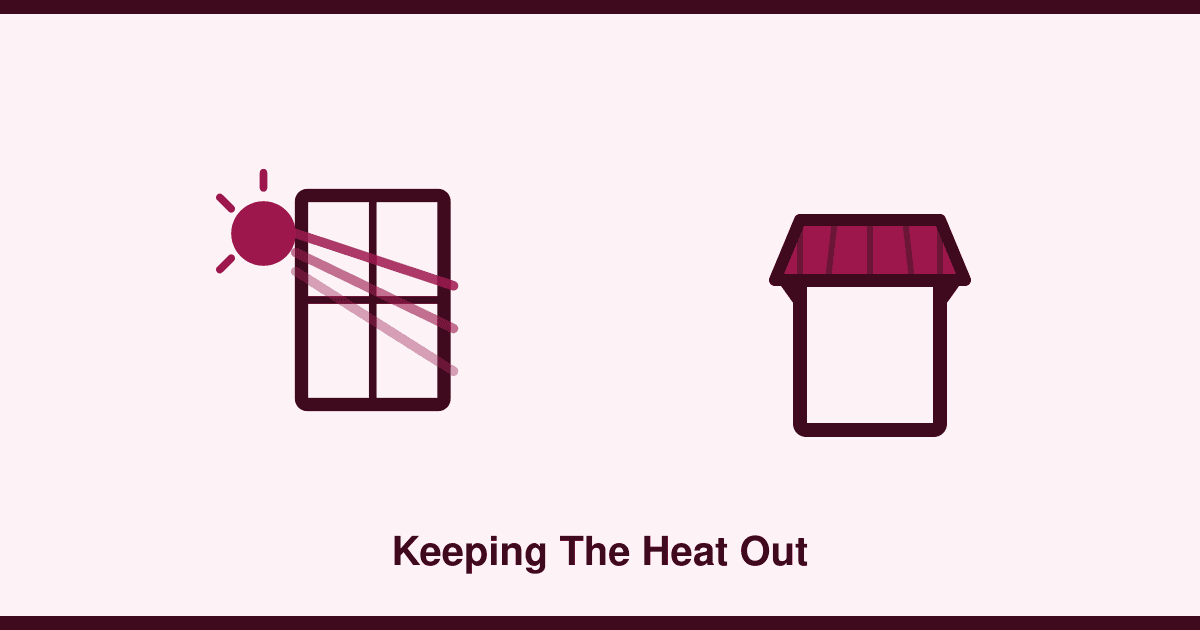
External awnings and outdoor blinds intercept the sun before it reaches the glass at all, which is the core reason they are commonly cited as considerably more effective for genuine heat rejection in an Australian summer. Outdoor blinds are commonly cited as cutting solar heat gain by around 55%, more than double the internal-blind figure above, and in terms of blocking the sun's heat and UV outright, outdoor blind fabrics are commonly cited as rejecting up to around 90% depending on the fabric's specific weave and openness factor. External aluminium awnings are commonly cited as reducing heat load by up to around 65%, and awnings more broadly are commonly cited as cutting summer solar heat gain by up to around 65% on south-facing windows and as much as 77% on west-facing windows, which matters given how much harsher west-facing glass typically gets hit by the low, intense afternoon sun through spring and summer in most of Australia.
None of this means internal blinds are pointless. They remain the more practical choice for privacy, for finishing the look of a room, for night-time light control regardless of season, and for glare management on screens and eyes even when heat is not the primary concern. Internal block-out fabric, covered in more detail in our separate article on block-out versus light-filtering fabrics, is also genuinely useful for keeping warmth in during cooler months, something an external awning does not really contribute to once retracted or once winter sun is actually wanted through the glass. The practical takeaway for most Australian homes is not choosing one over the other, but recognising that external shading, an awning or an outdoor blind, is generally the more effective single investment specifically for cutting a room's cooling load and glare on the harshest west and north-facing glass, while internal coverings remain the right tool for privacy, night-time darkness and finishing touches throughout the rest of the home.
On the awning side specifically, folding arm awnings, which extend and retract on hinged arms, are a common choice for shading a window or an outdoor living area on demand, with pricing commonly landing somewhere around $1,200 to $5,500 installed depending on size and whether the unit is motorised, and manual units can start considerably lower for a small window-only installation. Straight-drop or fixed awnings are commonly positioned as a more budget-friendly alternative where retractability is less important than simply blocking harsh, low-angle sun consistently.
The figures above are commonly cited ranges from Australian shading industry sources, not a guaranteed outcome for your specific home, since actual heat reduction depends on window orientation, fabric or awning colour and openness, and how well the installation is fitted and used. This article is general information, not engineering or energy-efficiency advice for your property. Our directory lists Australian awning, outdoor blind and internal blind specialists by area if you are ready to compare options for a hot-facing room.
Frequently asked questions
Generally, yes. External awnings and outdoor blinds intercept sunlight before it reaches the glass, and are commonly cited as cutting solar heat gain by around 55% to 65% or more, compared with roughly 18% on average commonly cited for internal blinds, which only act after sunlight has already passed through the window.
No, they serve different purposes. Internal blinds remain useful for privacy, night-time darkness, glare control and, with block-out fabric, retaining warmth in cooler months, while external shading is specifically the more effective option for reducing a room's cooling load in summer.
West-facing and north-facing windows generally see the most benefit, since they typically receive the most intense low-angle sun through the afternoon in spring and summer; awnings are commonly cited as cutting solar heat gain by up to around 77% on west-facing glass specifically.
Pricing commonly ranges from around $1,200 to $5,500 installed depending on size and whether the unit is motorised, with smaller manual units able to start lower and motorising an existing design commonly adding a few hundred dollars on top.