Blinds vs plantation shutters vs curtains: how to choose room by room
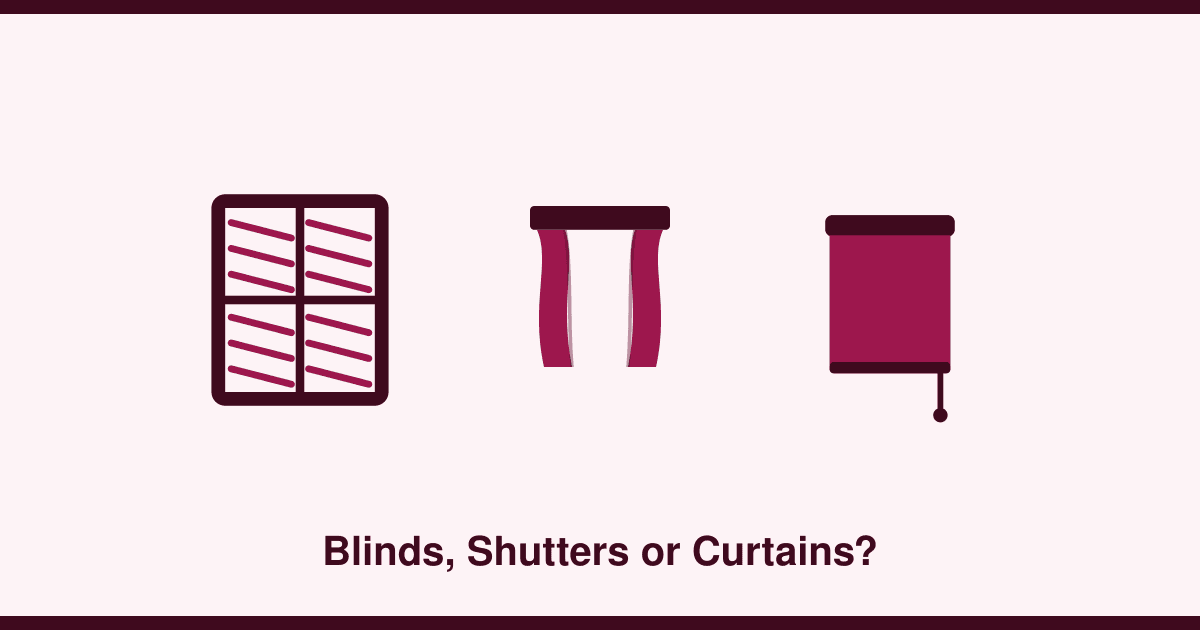
Walk into most Australian homes and you will usually find some mix of blinds, curtains and shutters rather than one covering used everywhere, and there is a good reason for that. Each option has a different balance of light control, moisture tolerance, privacy, insulation and cost, and the room usually matters more than personal taste alone when it comes to picking the right one.
Roller blinds are typically the simplest and most budget-friendly option, a single piece of fabric that winds onto a tube at the head of the window, available in block-out, light-filtering or sheer fabrics. They suit almost any room and are commonly the starting point for a first quote, with supply-and-install pricing for a standard roller blind typically landing somewhere around $80 to $150 per window, though the full range across sizes and fabrics commonly runs from about $60 up to $200. Venetian blinds, with horizontal slats that tilt to fine-tune light without raising or lowering the whole blind, are a popular alternative where precise light control matters, and aluminium slats in particular tend to cope well with humidity, which is part of why they turn up so often in kitchens and bathrooms.
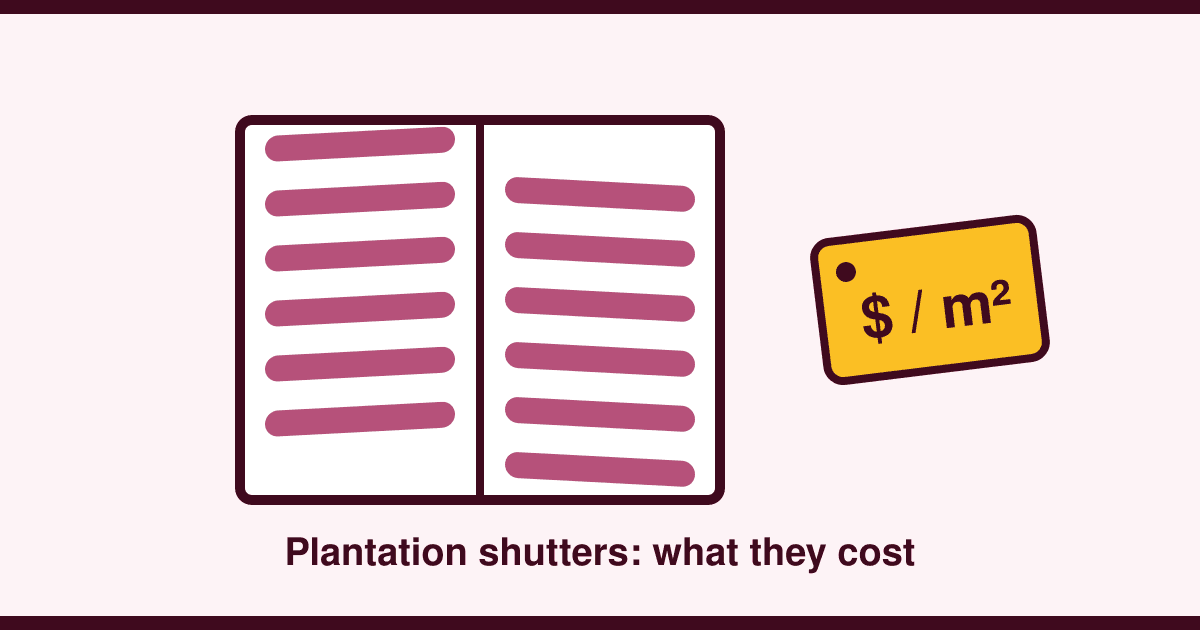
Plantation shutters sit at a different point on the spectrum. Built from solid timber, engineered wood or aluminium louvres set into a frame rather than fabric, they are a more permanent fixture than any blind, and they are commonly positioned as a longer-term investment rather than a quick, low-cost change. Pricing reflects that: a standard window commonly costs somewhere around $300 to $500 installed, and larger or premium-material jobs, particularly aluminium or western red cedar, are commonly quoted by the square metre, often somewhere in the range of $350 to $450 per square metre for PVC or timber and $450 to $900 per square metre for aluminium or cedar. Because shutters are solid and fully adjustable, they tend to suit living areas, bedrooms and north or west-facing rooms where both light control and a degree of added insulation are wanted, and their wipeable surface also makes them a common choice for bathrooms and kitchens where moisture is a factor.
Curtains bring something the others generally do not: softness, warmth and a finished, decorated look, particularly when paired with a pelmet or valance to hide the track. Made-to-measure curtain pricing varies a fair amount depending on fabric grade, track length and whether it is a single layer or a double curtain pairing a sheer with a block-out lining on one track; estimates commonly range from around $300 to $600 per window on the simpler end, up to $900 to $2,000 for a double curtain treatment, with pelmets commonly adding from around $65 per metre plus fabric on top. Curtains are a common choice for living rooms, bedrooms and formal spaces where a softer, layered look matters, and a sheer-plus-block-out combination is a common way to get daytime privacy and glare control along with full darkness at night from the same window.
For bathrooms and other consistently damp rooms, moisture tolerance is usually the deciding factor before style even enters the conversation. Aluminium venetians, PVC or aluminium shutters, and waterproof roller fabrics are generally better suited than timber shutters or fabric curtains, which can warp, swell or hold moisture and odour over time in a poorly ventilated bathroom. For bedrooms and home theatres, block-out fabric or a solid shutter louvre closed fully are the more reliable ways to get genuine darkness, something covered in more detail in our separate article on block-out versus light-filtering fabrics. For living areas and kitchens where daylight is generally wanted, light-filtering roller or venetian blinds, or an unlined curtain, tend to suit better than a fully block-out option.
None of this is a rule that overrides personal preference or budget, and mixing coverings room by room is entirely normal rather than a compromise. A common, practical approach is block-out roller blinds or shutters in bedrooms, moisture-tolerant venetians or shutters in bathrooms and kitchens, and curtains or light-filtering blinds in living areas, adjusted for how each room faces the sun and how much of the budget is left once the higher-cost rooms are sorted. Because pricing depends heavily on the specific window sizes, fabric or louvre choice and installer in your area, an in-home measure and quote, which our separate article walks through in detail, is generally the only reliable way to turn a room-by-room plan like this into an actual budget.
This article is general information to help narrow down your options, not a recommendation for your specific home. Our directory lists Australian blinds, shutters, curtain and awning specialists by area if you are ready to start comparing quotes.
Frequently asked questions
For many households, yes, since shutters are a permanent, solid fixture commonly positioned as a longer-term investment with added insulation benefits, though the higher upfront cost, commonly around $300 to $500 for a standard window and more per square metre for premium materials, needs to be weighed against a household's budget and how long they plan to stay in the property.
Moisture-tolerant options generally work best, such as aluminium venetian blinds, PVC or aluminium shutters, or waterproof roller fabrics, rather than timber shutters or fabric curtains, which can warp or hold moisture in a consistently damp room.
Yes, this is common practice rather than a compromise. Many Australian homes use block-out blinds or shutters in bedrooms, moisture-tolerant coverings in bathrooms and kitchens, and curtains or light-filtering blinds in living areas, adjusted room by room for sun exposure and budget.
General cost ranges are a useful starting point, but an in-home measure and quote appointment, which our separate article explains in detail, is generally the most reliable way to get pricing based on your actual window sizes, chosen fabric or louvre material, and installation requirements.